A City Where Floors Are Woven, Not Laid
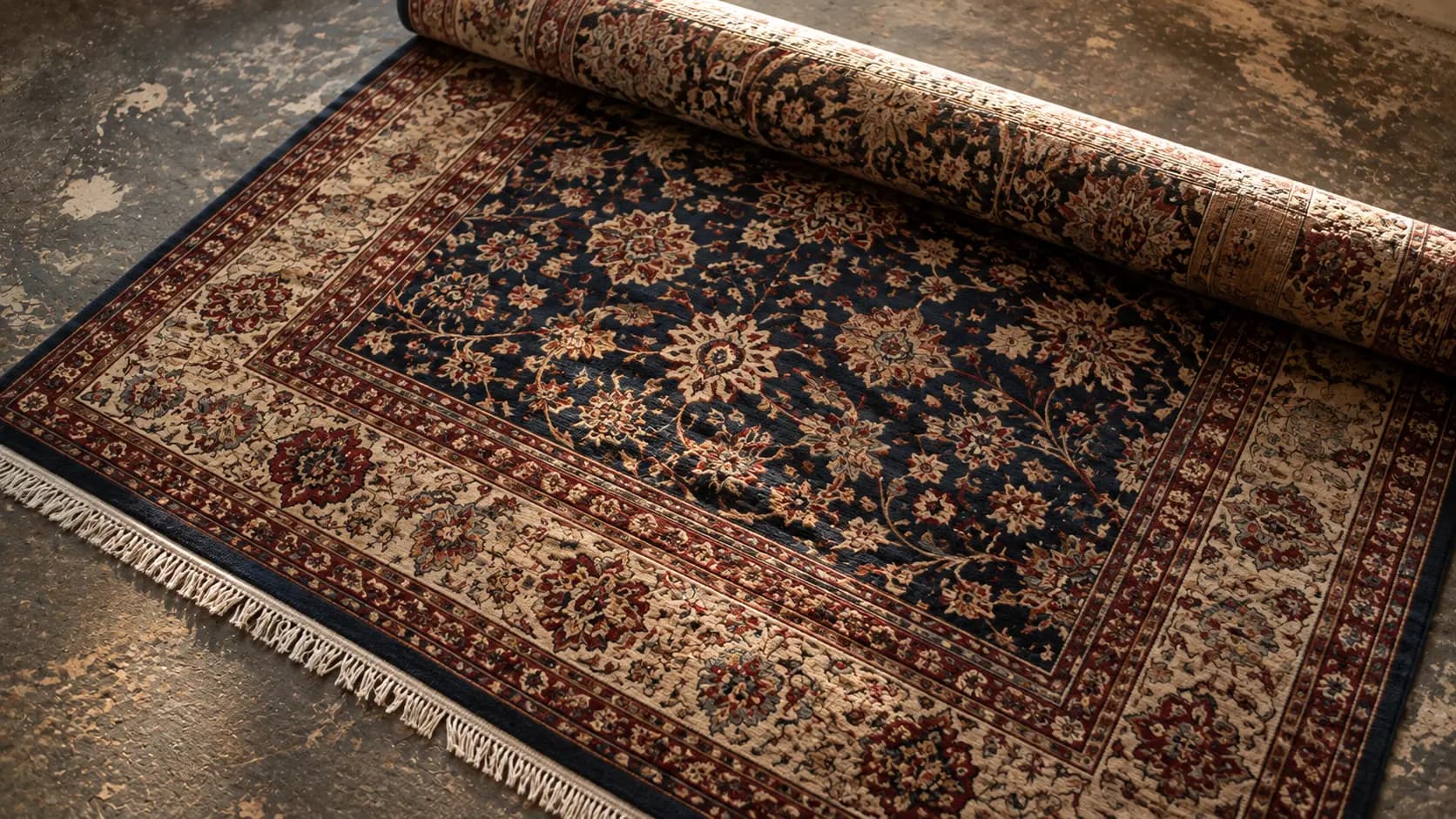
This is Bhadohi — a small district in eastern Uttar Pradesh that quietly supplies hand-knotted carpets to homes, palaces, and five-star lobbies across the world, while most of the world has never heard its name.
From Mughal Courts to Global Floors: The Bhadohi Story
Carpet weaving arrived here with the Mughals, who brought Persian master weavers to train local artisans along the Ganga plains in the 16th century. What began as a craft for royal courts slowly rooted itself in the villages of Bhadohi and neighbouring Mirzapur, passed from father to son, mother to daughter, loom to loom, until it became less an occupation than an inheritance.
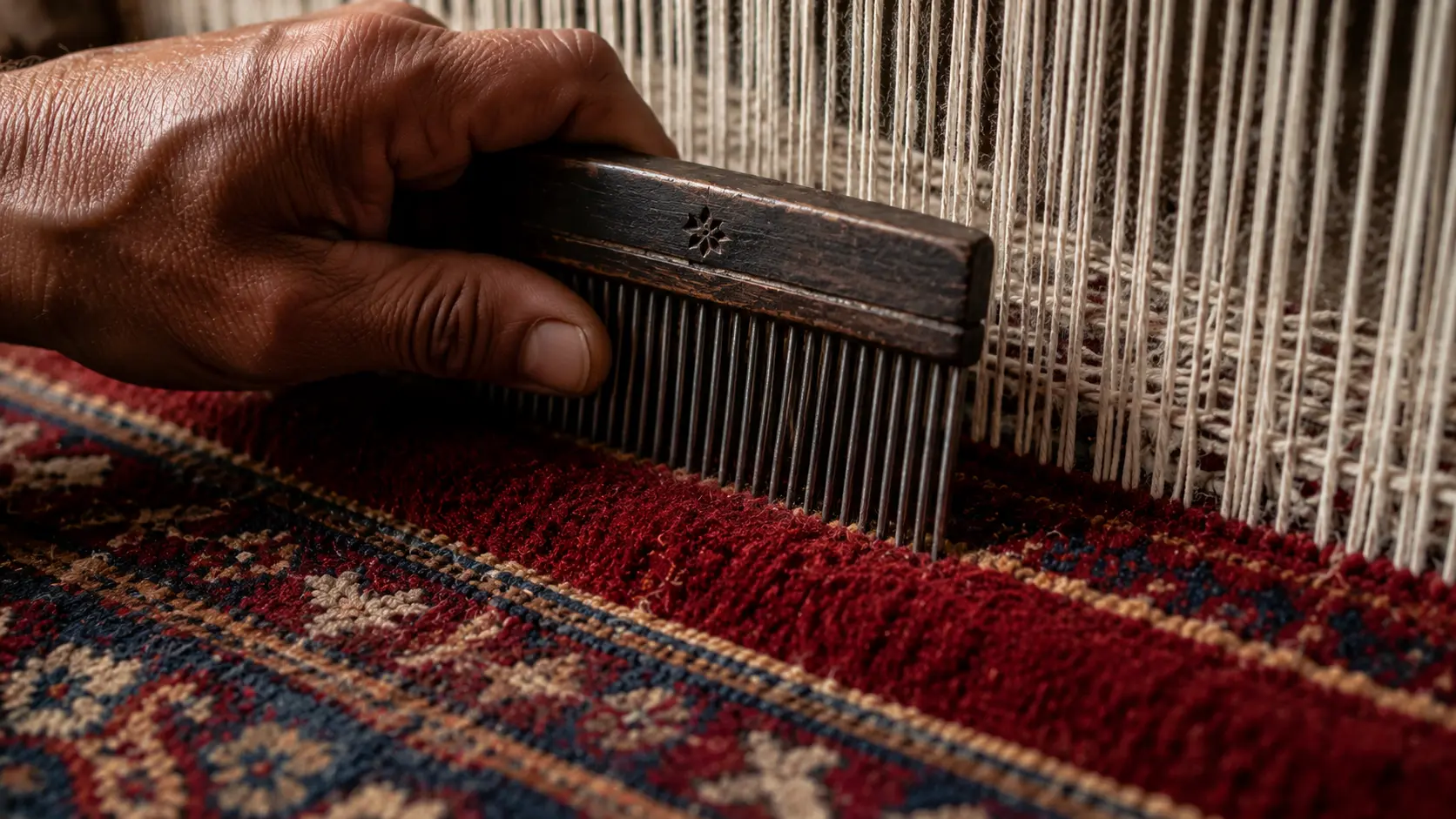
Today, the Bhadohi–Mirzapur belt carries a Geographical Indication (GI) tag — official recognition that a "Bhadohi Carpet" cannot be called that unless it is made here, by these hands, using techniques that have barely changed in six centuries. It is one of India's largest carpet-exporting clusters, and yet the weavers themselves remain some of the least visible artisans in the country's craft economy — working in home-based units, often invisible in the very supply chains their hands sustain.
Meet the Weavers
Ramzan Ali, 54
Master weaver, third generation
Learned the Persian knot at age nine, sitting beside his grandfather's loom instead of going to school some afternoons. "The design lives in my hand now, not my eyes," he says. "I can close them and still count the knots."
Sunita Devi, 41
Home-loom weaver
Like many women in the region, she weaves between household work, contributing to family income through a loom set up in her own courtyard. Her specialty: fine silk-on-cotton rugs with intricate floral borders — the kind that take nearly five months to finish.
Irfan, 26
Next-generation weaver
One of the younger artisans choosing to stay with the craft rather than migrate for factory work, now experimenting with contemporary geometric patterns while keeping the traditional Persian knot technique intact.
A Day on the Loom
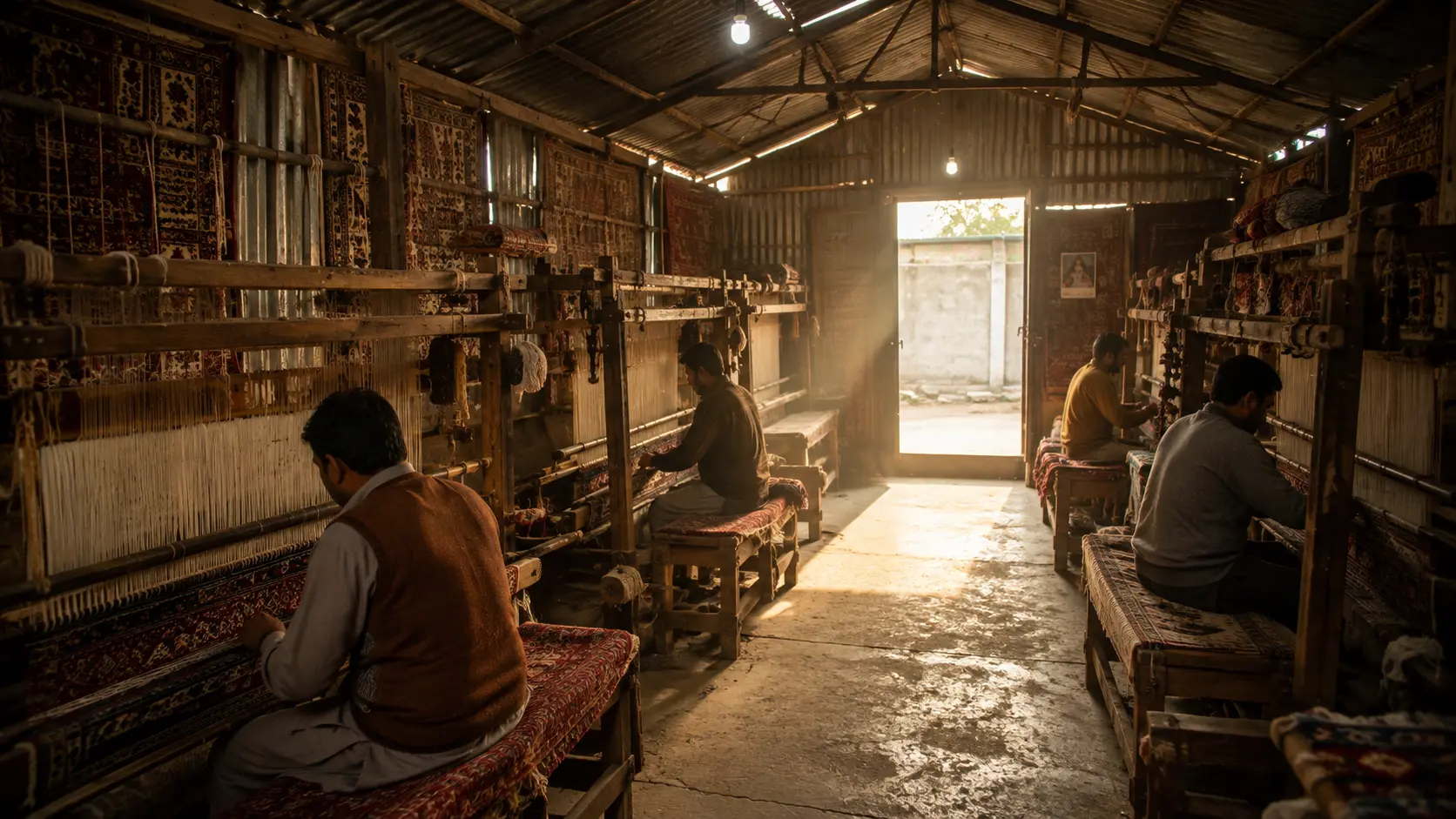
Morning — Setting the Warp
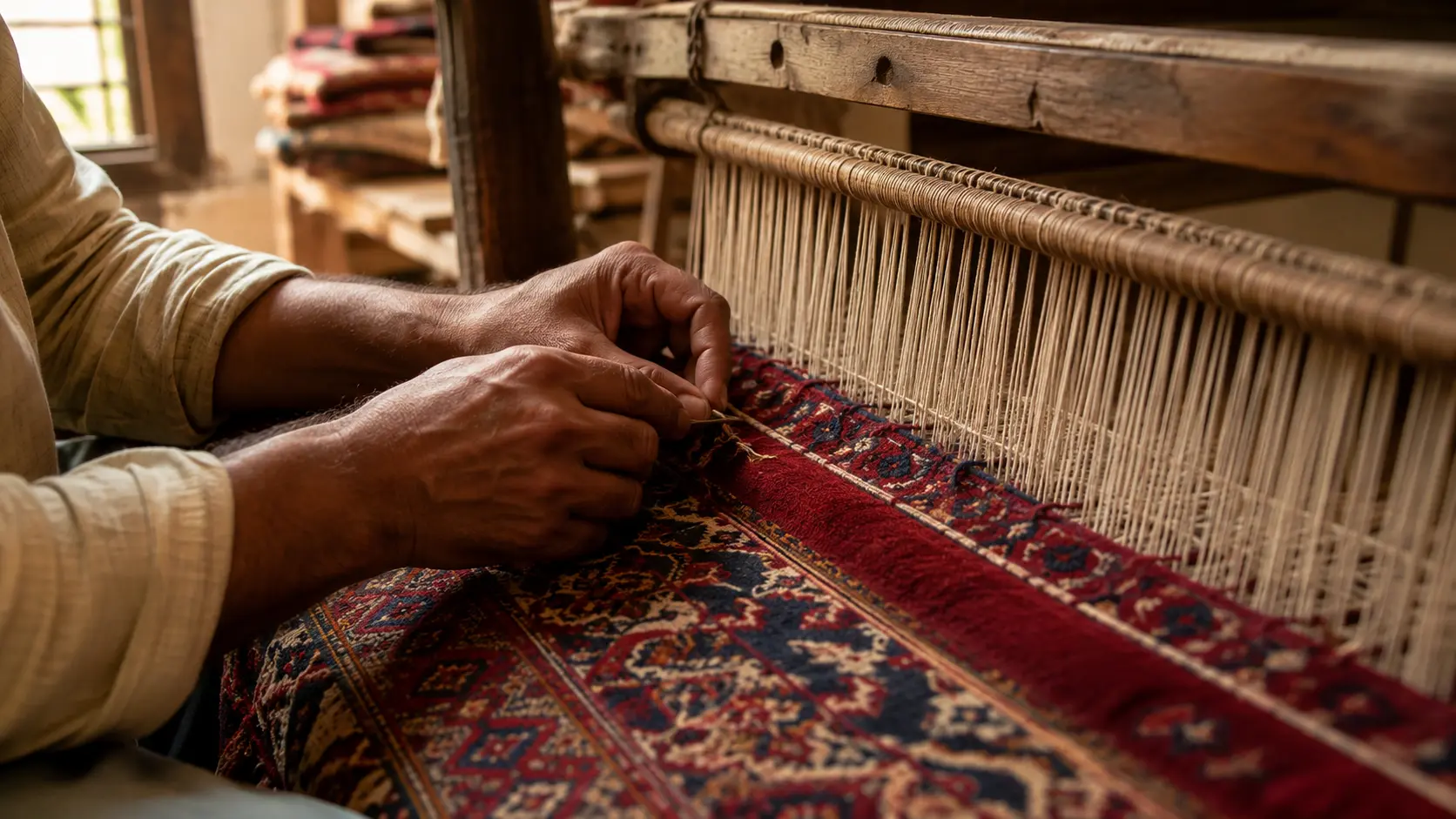
Cotton or silk threads are stretched vertically across the wooden loom frame, tensioned by hand to hold the entire carpet's structure.
Knotting Begins
Wool or silk yarn is looped and knotted around pairs of warp threads, row by row, following a hand-drawn or memorised naksha (pattern chart).
The Comb and the Shears
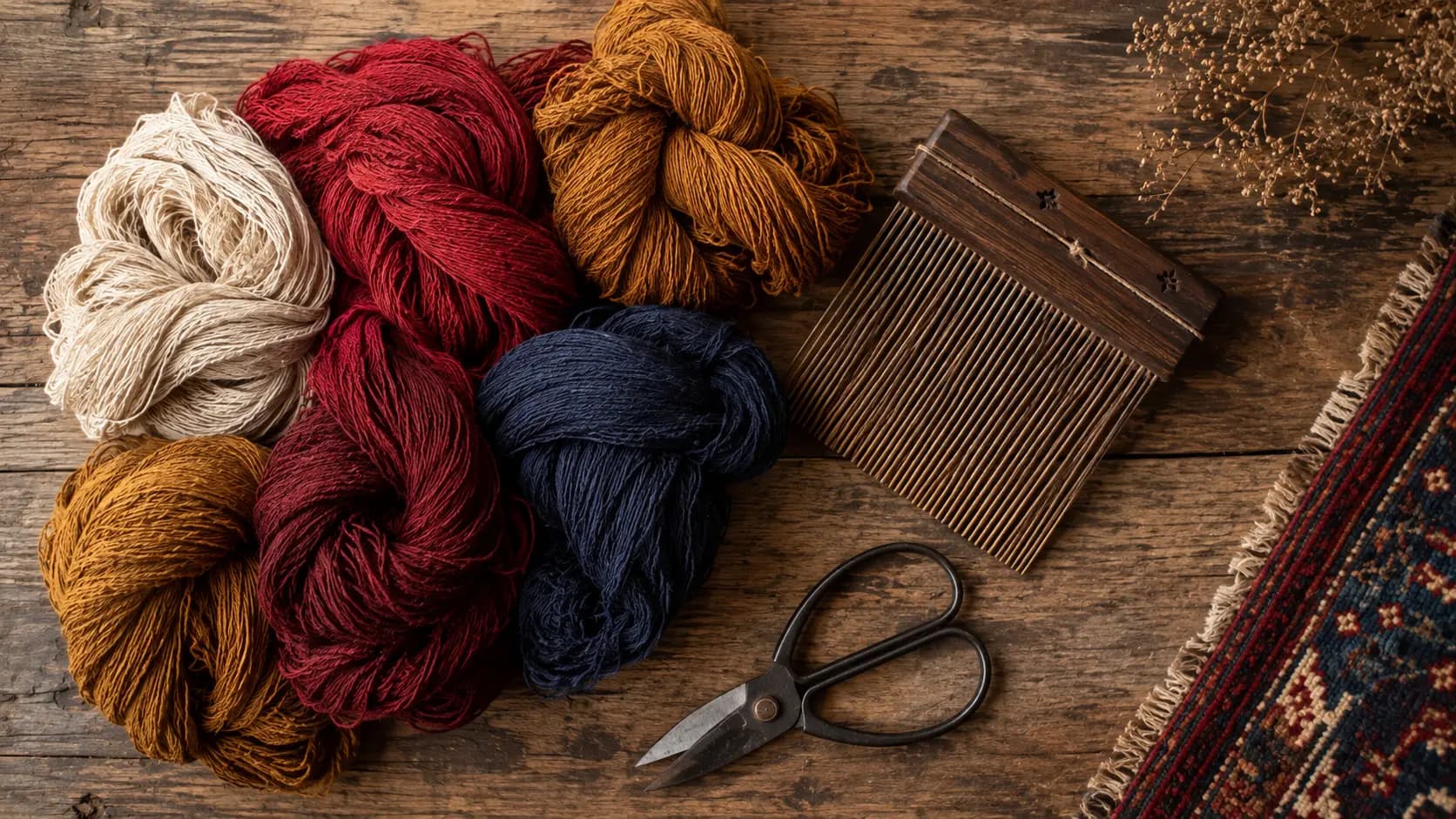
After every few rows, the weaver beats the knots tight with a heavy comb, then trims the pile level with hand shears — the difference between a good carpet and a masterful one lies entirely in this rhythm.
Evening — Counting Progress
Carpets are measured not in days but in knots-per-square-inch completed; a fine silk piece may take 6–8 months from first knot to last.
Washing and Finishing
Once off the loom, the carpet is washed, stretched, and given a final trim — a process that can take several more weeks before it is ready to leave Bhadohi.
Why It Matters
Hand-knotted carpets are a dying arithmetic — each one representing hundreds of thousands of individual knots that no machine has replicated with the same durability or depth of texture. Bhadohi's carpet belt supports thousands of artisan families, many of them women weaving from home, for whom this craft is both livelihood and legacy.
Choosing a hand-knotted Bhadohi carpet over a machine-made import is not just a design decision — it is a vote for a 600-year-old skill staying in human hands for one more generation.